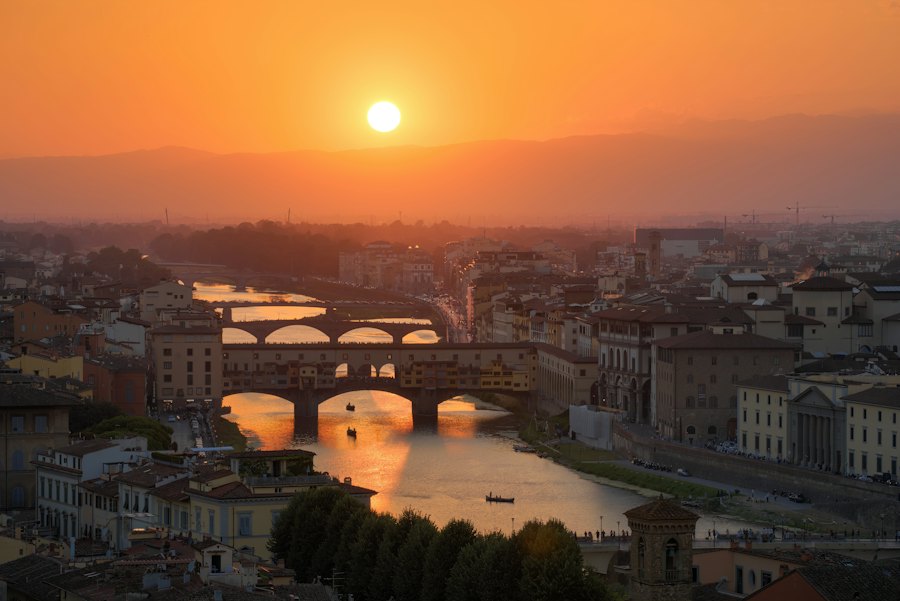
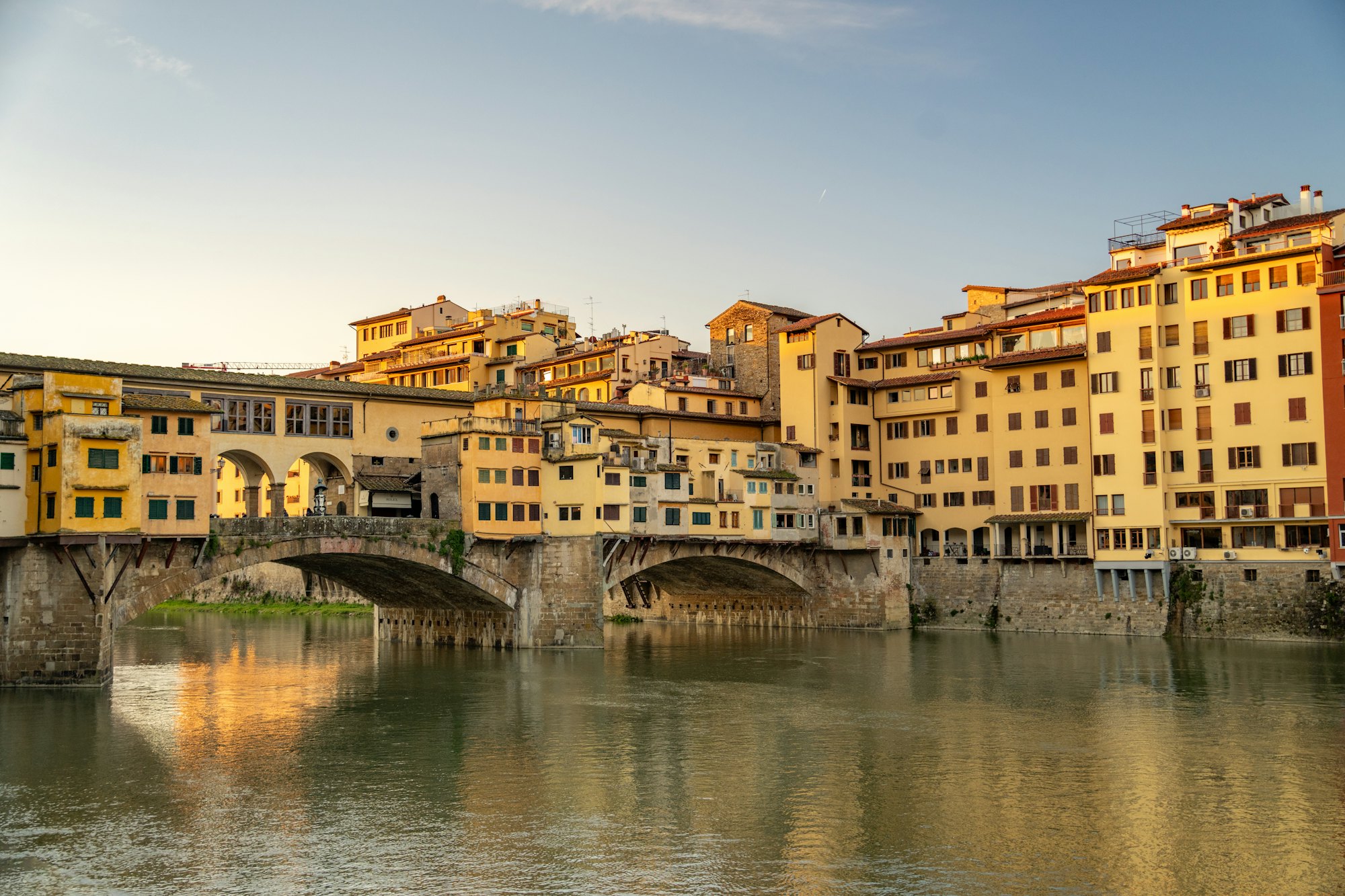
Above the shops on the Ponte Vecchio runs a long row of windows that many people notice without knowing what it is. This is the Vasari Corridor, the raised passage that let the Medici cross the city without ever setting foot in the street. Here is its story, how to visit it today and where to see it from outside.
01A private passage for the Medici
In 1565 Cosimo I de' Medici gave Giorgio Vasari an ambitious brief: a raised corridor of about one kilometre linking Palazzo Vecchio, the seat of government, with Palazzo Pitti, the family's new home on the other bank of the Arno. The duke could then move between his residence and his offices under cover, safely away from the crowds.
The occasion was the wedding of his son Francesco to Joanna of Austria, celebrated that same year. Vasari, who had already designed the Uffizi, built the corridor in just a few months, resting it on existing buildings, arches and the bridge itself. The result was unique: a private route across the city, the river and an entire neighbourhood.
02The route, from the Uffizi to Pitti
The corridor leaves Palazzo Vecchio, passes through the Uffizi and runs along the Arno on a row of arches. It then crosses the river above the shops of the Ponte Vecchio and, on the Oltrarno side, swings around the Torre dei Mannelli: the family refused to have their tower pulled down, so Vasari carried the corridor around the outside on large brackets.
Further on it passes inside the church of Santa Felicita, where a private balcony allowed the Medici to attend mass without being seen. The route ends at Palazzo Pitti, beside the Boboli Gardens. Few places tell the story of Medici power so clearly: from above, the family could watch the city without ever mixing with it.
03From butchers to goldsmiths
The Ponte Vecchio was once home to butchers, who threw their waste into the river below. In 1593 Ferdinando I, Cosimo's son, decided that such smells had no place beneath the grand dukes' passage, and replaced them with goldsmiths and jewellers, who still trade on the bridge today.
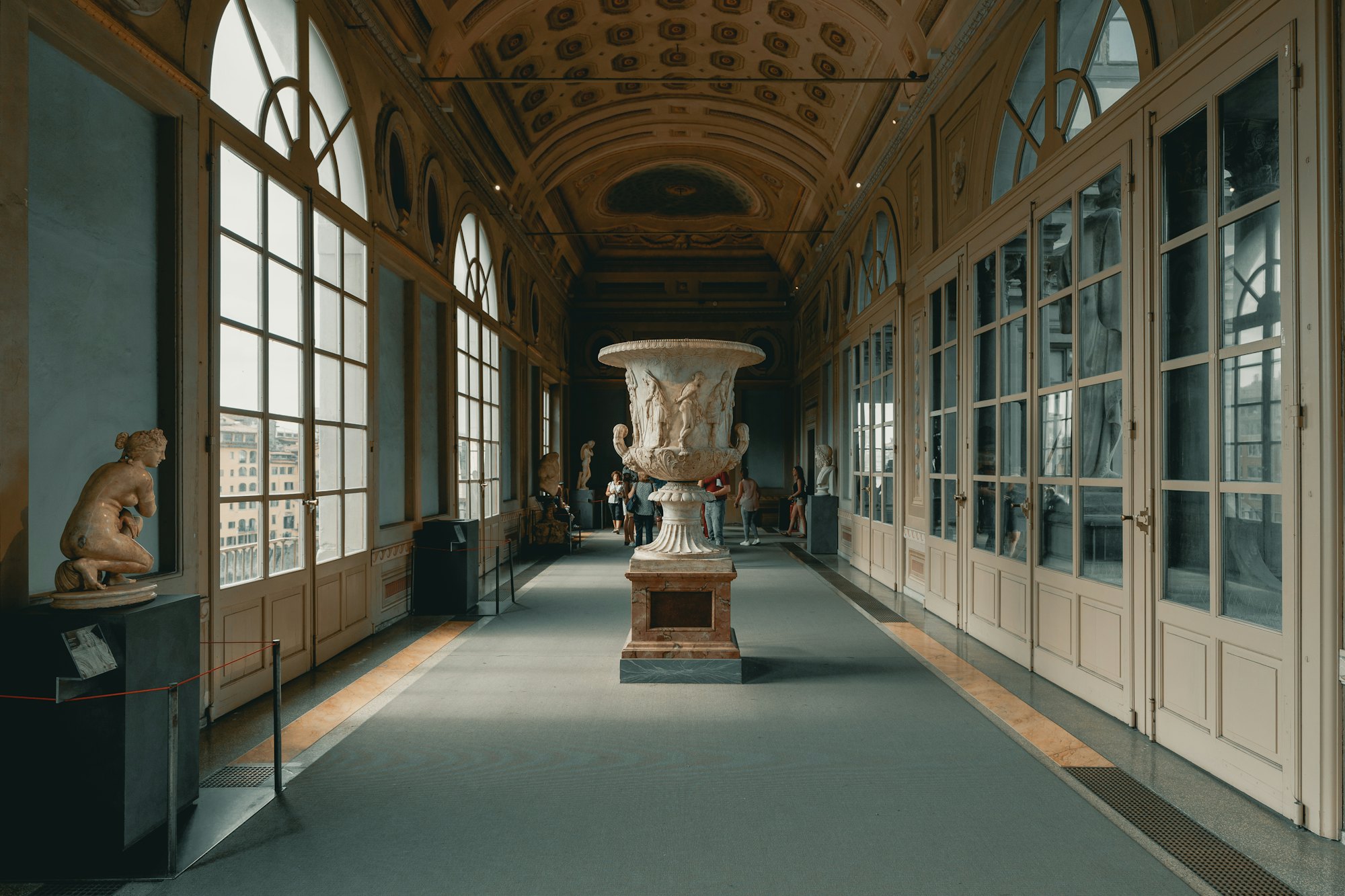
For many years the corridor housed a famous collection of artists' self-portraits. After a long closure and a major restoration, it reopened at the end of 2024. The work has given back to the city one of its most unusual places, for centuries open only to a privileged few.
04Visiting today
The Vasari Corridor can be visited by reservation through the Uffizi Galleries. Arrangements, days and availability may change during the year, so always check the official Uffizi Galleries website before planning your day, and book well in advance through official channels only.
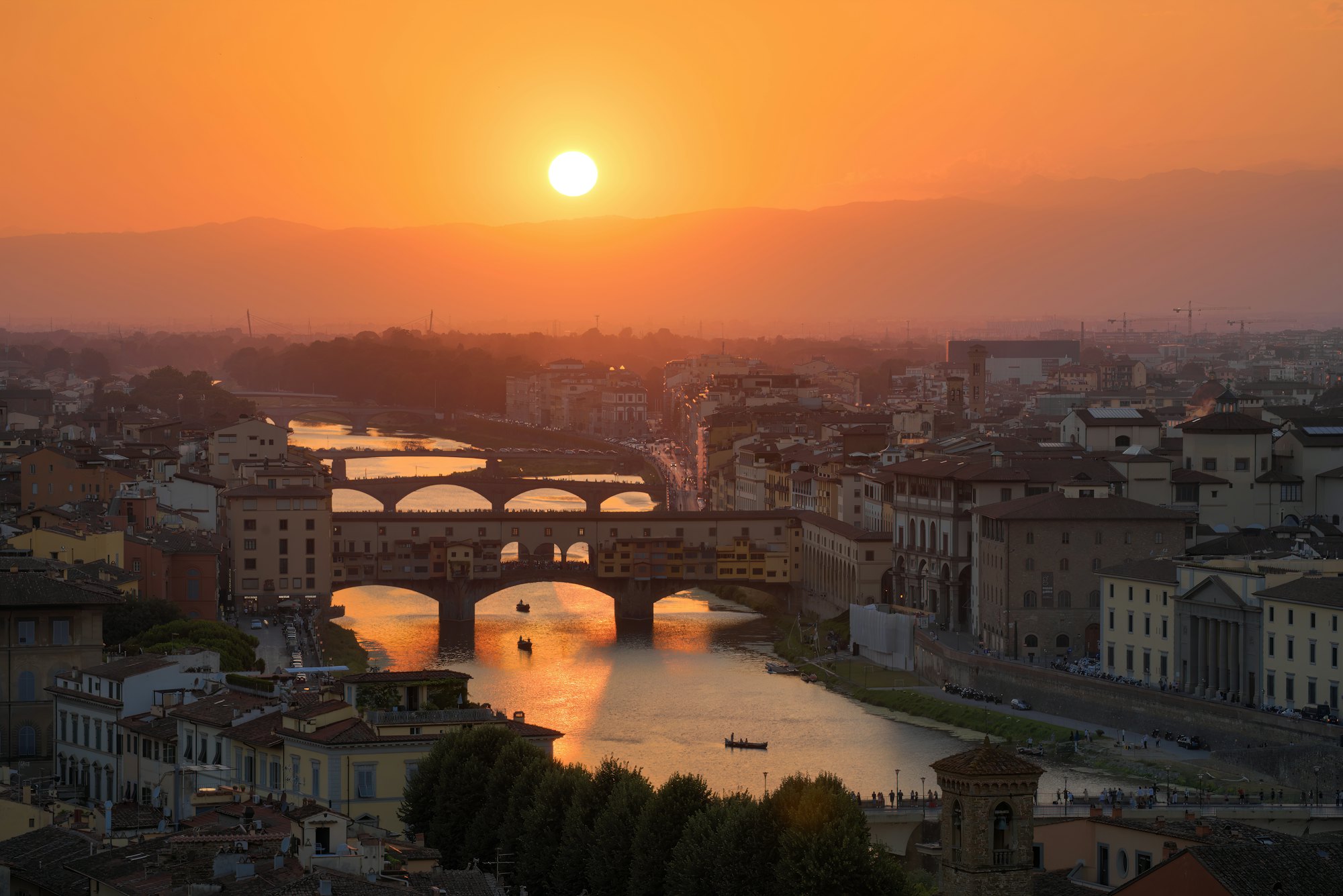
Walking inside means seeing Florence as the Medici saw it: from the windows you look out over the Arno, the bridge and the streets of the Oltrarno from a vantage point found nowhere else in the city. It pairs naturally with a visit to the Uffizi or Palazzo Pitti, completing the story of the family.
05Seeing it from outside
Even without going in, you can follow the corridor on foot. From the Uffizi courtyard, walk down to the Lungarno and look at the arches running beside the river towards the bridge. From Ponte Santa Trinita, looking towards the Ponte Vecchio, you will see a regular line of windows running above the shops: that is the corridor.
As you cross the Ponte Vecchio, look up above the shops on one side: the corridor runs along the whole length of the bridge. On the far bank, the Torre dei Mannelli clearly shows Vasari's detour, and in Piazza Santa Felicita the corridor passes across the front of the church, above its portico.